
What borehole drilling involves
A borehole is a narrow, lined well that reaches the water held in the rock, sand or gravel beneath your land, known as an aquifer. We set a tracked drilling rig over the chosen spot and drill down until we reach a water-bearing layer that can give a reliable supply.
The hole is then lined with casing so it can’t collapse, with slotted screen sections where the water enters and a gravel pack around them to keep out sand and grit. The top is sealed so surface water can’t run down the outside of the casing and into the aquifer. Finally we flush the borehole until the water runs clear and test how much it can yield, which tells us what size of pump it can support.
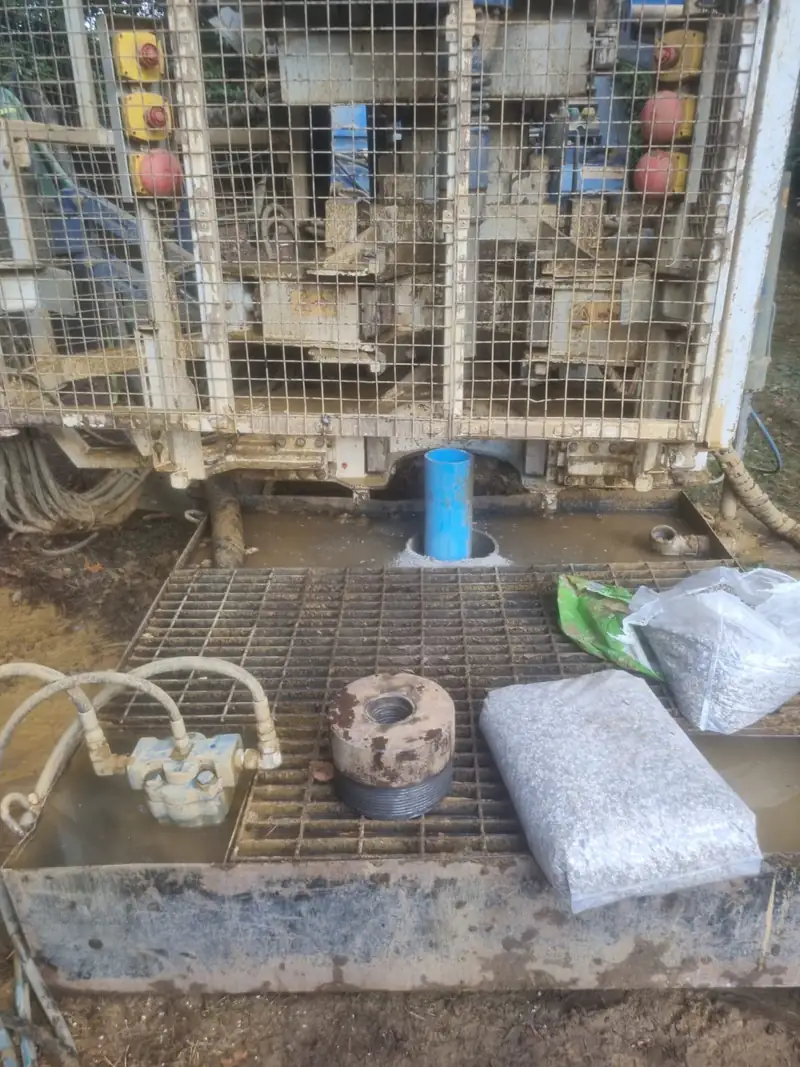
How long it takes
Time on site depends on how deep we need to go, what the ground is like and how easy it is to get the rig in. A straightforward borehole is often drilled, cased and tested over a few days, while deeper holes, hard rock or awkward access take longer.
Before anything starts you get a realistic timescale with your quote, and we keep you informed on timing once we’re on site.
What affects the cost
Every site is different, so we don’t publish set prices. The cost of a borehole mainly comes down to:
- how deep we need to drill to reach a reliable supply
- the ground conditions, from soft sands and clays to hard rock
- the diameter of the borehole and the casing and screen it needs
- access for the rig and the distance from the road
- how far the water has to travel to your tanks or building
- any pump, storage, filtration or treatment fitted afterwards
After the site visit you get a written quote that sets these out, so you know what you’re paying for before we drill.
What to expect on site
The rig runs on tracks, and where the ground needs it we lay protection mats before moving in. Drilling brings up water and cuttings, which we collect in settling tanks rather than letting them run across your land. The rig is noisy while it’s running, so it’s worth letting your neighbours know when we’re due.
When the borehole is finished we tidy the site, cap the borehole head and talk you through the flow and clarity results before we leave.
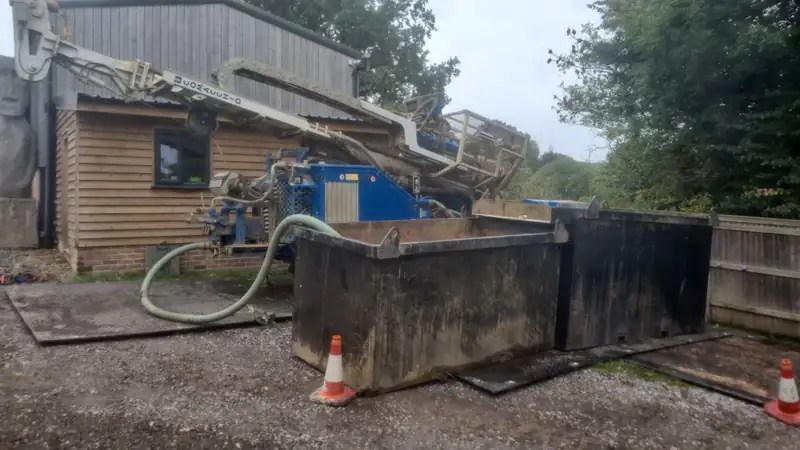
After the borehole is drilled
Most boreholes go straight on to borehole pump installation, so the water can reach your tanks or building. To keep the supply delivering for years, see borehole servicing and maintenance, or look through the gallery of rigs and installations.
Borehole drilling questions
How deep do boreholes usually go?
There’s no single answer, because depth depends on the geology under your site and on how much water you need. Some boreholes find a good supply within a few tens of metres; others need to go much deeper. We study the geological records before quoting, and the quote gives an expected depth.
How long will the rig be on site?
For a straightforward borehole, usually a few days for drilling, casing and testing. Deep holes, hard rock or difficult access add time, and your quote tells you what to expect.
Will I need a licence or permission?
In England, taking more than 20 cubic metres (20,000 litres) of water a day generally needs an abstraction licence from the Environment Agency. Natural Resources Wales and the Scottish Environment Protection Agency set the rules in Wales and Scotland. We check what applies to your site with you before we drill.
Will the water be good enough to drink?
Often, but not always. Depending on the ground, groundwater can contain iron, manganese, hardness or bacteria. If you want to drink it, have a sample tested by a laboratory once the borehole is running, then choose filtration or treatment to suit the results.
Is my property big enough for a borehole?
Usually, yes. Size matters less than access: the rig needs a gateway or side passage it can track through, a firm spot to drill and room for settling tanks. The borehole also needs to sit well away from septic tanks, soakaways and drains, which we check at the site visit.
Do you drill outside Hampshire?
Yes, we work across the UK from our base in Yateley. The process is the same wherever you are: a call or email, a site visit and survey, then a written quote.